
What is a performance review or performance appraisal?
Here are some key points the book highlights about constructive feedback:
-
Balance Between Positive and Corrective Feedback
-
Constructive feedback should include both praise for strengths and guidance on areas for improvement.
-
Employees need to know what they are doing well to stay motivated while also understanding where they need to improve.
-
-
Specificity Over Generalization
-
Feedback should be clear, specific, and based on observable behaviors rather than vague statements.
-
Instead of saying, "You need to improve your communication skills," a manager should say, "During the last team meeting, you interrupted a colleague twice, which affected the flow of discussion."
-
-
Timeliness Matters
-
Feedback should be given regularly, not just during annual performance reviews.
-
Timely feedback helps employees correct issues before they become major problems.
-
-
Focusing on Behavior, Not Personality
-
Effective feedback should address an employee’s actions and results, not personal traits.
-
Example: Instead of saying, "You’re not a team player," say, "I noticed you didn’t contribute during the brainstorming session. Your input would be valuable to the team."
-
-
Encouraging Two-Way Dialogue
-
Constructive feedback should be interactive, allowing the employee to ask questions, clarify expectations, and share their perspective.
-
Managers should ask open-ended questions like, "How do you see this issue?" or "What support do you need to improve?"
-
-
Building a Culture of Continuous Feedback
-
Performance feedback should be a regular part of the work environment rather than a once-a-year event.
-
Ongoing feedback fosters growth and development while reducing anxiety around formal reviews.
-
What is the purpose of a performance appraisal?
Performance reviews aim to enable employees to discover their strengths and weaknesses which allows them to enhance their performance while receiving necessary support to reach their objectives along with additional benefits. The performance review system enables employers to recognize employees whose hard work and accomplishments warrant appreciation and rewards. The performance appraisal process involves multiple important stages which include establishing performance targets followed by monitoring target achievement methods before providing feedback and evaluating the final performance outcomes. The review meeting includes the employee and their managers as they examine both achievements and problems encountered throughout the evaluation period.- To ensure clarity of job roles and expectations: Performance review acts as a platform where supervisors and their employees discuss their responsibilities and expected performance standards. Providing employees with transparent goal-oriented expectations helps those subordinates understand what they need to do to perform their job and advance business progress.
- To provide feedback on performance: Employees can discover their resistance to work success through performance reviews. This data helps employees understand their successful actions and recognize areas that require their attention. The disclosure of such information helps employees recognize the significance of their work while motivating them to maintain high-performance standards.
- To identify training and development needs: Performance reviews function to detect areas where employees require additional training and development. This generates programs among the organizations. These programs function as tools for employee education and development within their professional domains.
- To set goals and objectives: Performance appraisal enables managers and employees to establish organizational goals which align with the company's objectives. Through this system employees understand their tasks and how their contributions support organizational growth.
- To determine promotions and pay raises: The evaluation of employee performance serves as the primary determinant in decisions regarding promotions and salary increases. Employees who work diligently will likely receive promotion opportunities and salary improvements. Employees who do not meet performance standards receive improvement suggestions or enroll in remedial plans to help them advance.
What to Do Before the Review or Appraisal?
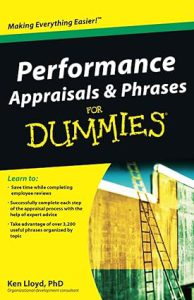
In Performance Appraisals and Phrases For Dummies by Ken Lloyd, the author outlines several key steps to take before conducting a performance review or appraisal to ensure it is effective, fair, and productive. Here are the essential steps:
1. Gather Relevant Data and Documentation
-
Collect performance records, project reports, self-evaluations, peer feedback, and previous appraisals.
-
Use quantifiable metrics to assess performance objectively.
2. Review Goals and Expectations
-
Revisit the employee’s job description and performance goals set in the last review.
-
Ensure you have a clear understanding of what was expected versus what was achieved.
3. Identify Key Strengths and Areas for Improvement
-
Make a balanced assessment by noting both strengths and areas needing development.
-
Use specific examples of accomplishments and challenges.
4. Prepare Constructive Feedback and Examples
-
Plan your feedback using specific, actionable language.
-
Instead of saying, "You need to be more productive," say, "Over the last quarter, you completed 5 out of 10 assigned projects on time. Let’s discuss ways to improve efficiency."
5. Plan for a Two-Way Discussion
-
Anticipate the employee’s possible concerns or questions.
-
Be ready to listen actively and encourage the employee to share their perspective.
6. Set the Right Tone and Agenda
-
Approach the review as a collaborative conversation, not just an evaluation.
-
Outline the key points to discuss, such as achievements, challenges, career growth, and future expectations.
7. Schedule the Meeting at an Appropriate Time
-
Choose a time when both you and the employee can focus without distractions.
-
Avoid scheduling it at stressful moments (e.g., right before a deadline).
8. Prepare for Goal-Setting and Development Plans
-
Think about future objectives and how to align the employee’s growth with company goals.
-
Be ready to discuss training, mentorship, or opportunities for career advancement.
Provide regular feedback throughout the year
Use objective criteria to evaluate performance
Encourage self-evaluation and reflection
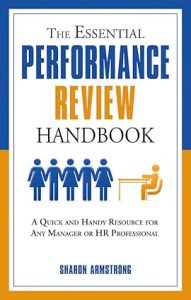
In The Essential Performance Review Handbook by Sharon Armstrong, the author emphasizes the importance of self-evaluation and reflection as a key component of an effective performance review process.
Here’s what the book highlights about this practice:
1. Promotes Employee Ownership of Performance
-
Encouraging employees to evaluate their own performance helps them take responsibility for their achievements and areas of improvement.
-
It fosters a sense of accountability and engagement in their professional development.
2. Encourages Honest Self-Assessment
-
Employees gain a chance to reflect on their strengths, accomplishments, and challenges before receiving feedback from their manager.
-
This process helps prevent surprises during the review, making it a more constructive discussion.
3. Identifies Perception Gaps Between Employees and Managers
-
Self-evaluations allow managers to see how an employee perceives their performance compared to their supervisor’s assessment.
-
If there is a major difference in views, it creates an opportunity for clarification and coaching.
4. Improves Two-Way Communication
-
Employees feel more involved in the review process when they have a voice in evaluating their own work.
-
It shifts the review from a one-sided judgment to a collaborative discussion about growth and development.
5. Helps Set Meaningful Goals
-
Through self-reflection, employees can identify personal and professional growth areas they want to focus on.
-
Managers can use these insights to align company goals with individual career aspirations.
6. Provides a Basis for Constructive Feedback
-
A well-structured self-evaluation helps managers tailor feedback based on the employee’s own insights.
-
It encourages employees to come prepared with examples of achievements, challenges, and areas where they seek improvement.
Tips for Encouraging Self-Evaluation (as suggested in the book):
-
Provide employees with a structured self-assessment form with clear questions.
-
Ask employees to list key accomplishments, challenges, and areas for development.
-
Encourage employees to use specific examples and data to support their self-assessment.
-
Use the self-evaluation as a starting point for the performance discussion rather than as a final verdict.
Focus on strengths and areas for improvement
5 must-read Books for Performance Review
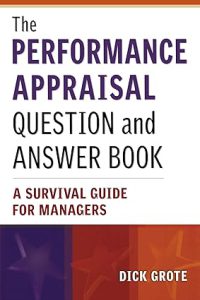
- "The Performance Appraisal Question and Answer Book" by Dick Grote This book is an absolute manual and a powerful tool for successfully conducting performance appraisals. It has questions answered in a manner that people finding difficult to understand things. At outset, the piece discusses designing goals, offering feedback, dealing with tricky discussions and performing evaluation correctly. The writer offers managers and employees with practical guidelines as well as examples of real lives to assist both of them in the process of performance reviews.
- "2600 Phrases for Effective Performance Reviews" by Paul Falcone As its name suggests, this book has got a big list of the phrases that can be used when providing a response to the employees after the performance reviews. It contains statements for approving, thinking about and building up what is good, and searching, and linking it to progress and development. It is the true benefit for the bosses who are not so good at construction of sentences to write comments.
- "Performance Appraisals and Phrases For Dummies" by Ken Lloyd The book offers a clear and easy step-by-step guide to getting rid of the usual, stereotype performance appraisals and moving on to the productive type. This covers all things such as getting prepared, giving top priority, making the presentation of data good, and you record everything in a note. It is provided as well with many quotes and examples to enable you writing the feedback in a factual manner.
- "Effective Phrases for Performance Appraisals" by James E. Neal Jr. This book is loaded with good example statements and sentences that you can use when filling out employee performance review sections. As it provides you with some specific words for compliment and criticism, your speech is more clear. The book offers you a practical approach to this issue also by setting goals, planning and inspiring your employees to do their best.
- "The Essential Performance Review Handbook" by Sharon Armstrong This guidebook gives you practical tips and tools for doing performance reviews that work well. It talks about important things like making sure everyone knows what's expected, giving helpful feedback, and dealing with problems in performance. The book also talks about how to handle any difficulties that might come up during the review process and gives you ideas for dealing with them. It's a really helpful resource for both managers and employees who want to get better at doing performance appraisals.